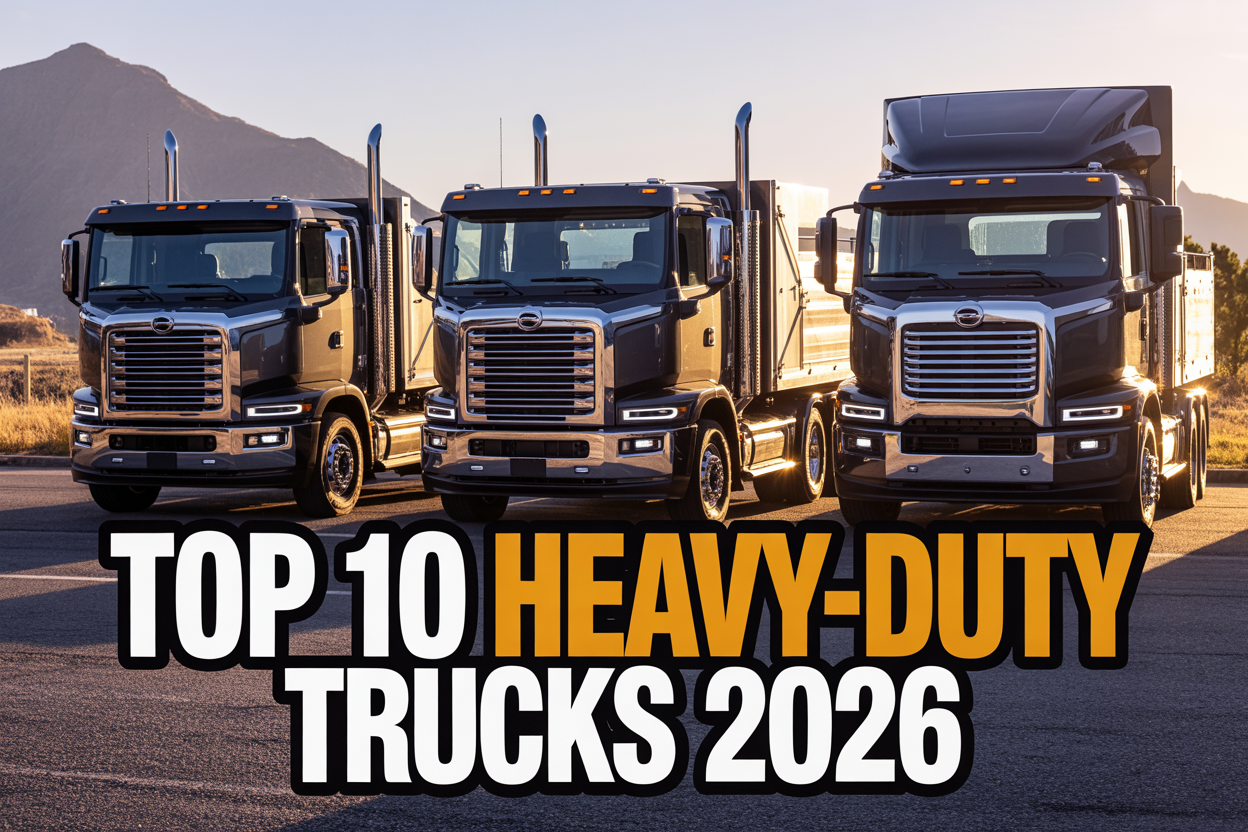
The 2026 heavy-duty truck market brings exciting new models packed with advanced technology and unmatched capabilities. This comprehensive guide is designed for fleet managers, business owners, contractors, and truck enthusiasts who need maximum towing power and job site reliability.
We’ll break down the top 10 heavy-duty trucks of 2026 across all major categories, from Class 2 to Class 3 pickups that can handle the toughest workloads. You’ll discover which models lead in towing capacity and payload ratings, plus get the inside scoop on pricing and value comparisons to help you make the smartest purchase decision. We’ll also cover the latest comfort and technology features that make these workhorses surprisingly enjoyable to drive every day.
Understanding Heavy-Duty Truck Categories and Classifications
Understanding Heavy-Duty Truck Categories and Classifications
Small Trucks for Urban Efficiency and Maneuverability
Small trucks in the heavy-duty category are designed to navigate urban environments while maintaining essential work capabilities. These vehicles prioritize fuel efficiency and maneuverability without sacrificing the fundamental power requirements needed for professional applications. Their compact design makes them ideal for city deliveries, light construction work, and situations where parking space and turning radius are critical considerations.
Midsize Trucks for Balanced Performance and Capability
Midsize heavy-duty trucks represent the sweet spot between efficiency and power, offering a balanced approach to professional trucking needs. These vehicles bridge the gap between urban-focused smaller models and full-size heavy-duty options, providing enhanced towing capacity while maintaining reasonable fuel economy and drivability.
Large Trucks for Maximum Versatility and Power
Large trucks in the heavy-duty segment deliver exceptional versatility across diverse professional applications. The 2026 Ram 2500 exemplifies this category, featuring best-in-class available base diesel torque of 1,075 pound-feet when equipped with the High-Output 6.7L Cummins® Turbo Diesel I6 engine. This configuration enables a maximum towing capacity of 20,000 pounds and payload capacity of 2,740 pounds, making it suitable for demanding work scenarios ranging from construction to recreational towing.
Heavy-Duty Trucks for Professional Workloads and Extreme Towing
The pinnacle of heavy-duty classification encompasses trucks designed for the most demanding professional workloads and extreme towing applications. The 2026 Ram 3500 represents this category’s capabilities, delivering the same 1,075 pound-feet of best-in-class available base diesel torque while significantly expanding operational capacity. With a maximum towing capacity of 36,610 pounds and payload capacity of 6,050 pounds, these trucks are engineered for commercial operations, heavy equipment transport, and industrial applications where maximum capability is non-negotiable.
Class 8 trucks, representing the highest commercial vehicle classification, continue to evolve within a complex regulatory and economic landscape. The 2026 outlook indicates a stabilized market operating at normalized production volumes, with OEMs adjusting build plans to align with actual demand rather than speculative growth. This segment faces ongoing regulatory pressures from EPA Clean Truck and GHG-3 regulations, though implementation uncertainty has affected fleet planning strategies and prebuy momentum.
Top-Ranked Heavy-Duty Truck Models for Ultimate Performance
Top-Ranked Heavy-Duty Truck Models for Ultimate Performance
Now that we have covered the fundamental understanding of heavy-duty truck classifications, let’s examine the leading models that deliver exceptional performance in 2026. These trucks represent the pinnacle of engineering excellence, combining raw power with sophisticated design elements that set them apart in the competitive heavy-duty market.
Ford F-250 Super Duty for Maximum Towing and Interior Design
The Ford F-250 Super Duty stands as an impressive heavyweight champion in the heavy-duty truck segment. This powerhouse delivers massive towing and payload capability that makes it a formidable choice for serious work applications. Beyond its raw strength, the F-250 Super Duty features a cleverly designed interior that maximizes both functionality and comfort for operators who spend long hours behind the wheel.
What truly distinguishes the F-250 Super Duty is its balanced approach to performance and refinement. The truck maintains a comfortable ride quality while remaining reasonably quiet during operation, making it surprisingly easy to drive despite its substantial capabilities. This combination of power and civility makes it suitable for both demanding work scenarios and daily driving needs.
However, potential buyers should be prepared for premium pricing, as higher-specification trims can eclipse six-figure price points, reflecting the truck’s advanced engineering and extensive capability set.
Ram 2500 for Smooth Daily Driving and Coil-Spring Comfort
The Ram 2500 distinguishes itself through its innovative coil-spring suspension system that transforms the traditional heavy-duty truck experience. This sophisticated suspension setup keeps the truck remarkably well-mannered on pavement, delivering a smooth ride quality that rivals lighter-duty vehicles while maintaining the robust capabilities expected from a heavy-duty platform.
The 2026 Ram 2500 offers impressive performance specifications, including a maximum torque output of 1,075 pound-feet when equipped with the available High-Output 6.7L Cummins Turbo Diesel I6 engine. This powerplant delivers a maximum towing capacity of 20,000 pounds and a maximum payload of 2,740 pounds, ensuring it can handle demanding work applications with confidence.
What sets the Ram 2500 apart is its dual personality as both a capable heavy-duty workhorse and a companionable daily driver. The range of powerful engines available provides flexibility for different use cases, while the coil-spring suspension ensures that operators don’t sacrifice comfort for capability.
Chevrolet Silverado 2500HD for Cost-Effective Heavy-Duty Performance
The Chevrolet Silverado 2500HD represents exceptional value in the heavy-duty truck segment, offering smooth operation at a price point that costs thousands less than its primary competitors. This cost-effective approach makes it particularly appealing for budget-conscious buyers who still require serious towing and hauling capabilities.
The Silverado 2500HD operates with notable smoothness, delivering reliable heavy-duty performance without the premium pricing found elsewhere in the segment. While the interior features fewer premium materials compared to rival offerings, this trade-off contributes significantly to its competitive pricing advantage.
For buyers who prioritize capability over luxury appointments, the Silverado 2500HD becomes a compelling option that delivers essential heavy-duty truck functionality without unnecessary premium features that drive up costs. This practical approach makes it an ideal choice for fleet applications and cost-conscious individual buyers who need genuine heavy-duty performance.
Essential Performance Specifications and Capabilities
Essential Performance Specifications and Capabilities
Towing Capacity Ratings for Heavy Trailers and Equipment
Heavy-duty trucks deliver exceptional towing capabilities that far exceed those of standard pickup trucks. The 2025 Ford F-350 Super Duty leads the conventional towing category with an impressive 25,000-pound capacity, while gooseneck configurations can handle up to 38,000 pounds. Ram’s 3500 Heavy Duty achieves the highest gooseneck rating at 36,610 pounds, making it ideal for hauling the heaviest commercial trailers and equipment.
The ¾-ton category delivers substantial capability with models like the Ford F-250 Super Duty offering 22,000 pounds conventional and 23,000 pounds gooseneck capacity. Chevrolet Silverado 2500HD and GMC Sierra 2500HD both provide 20,000 pounds conventional towing, with gooseneck capabilities reaching 22,430 pounds. These ratings make them perfect for construction equipment, large RVs, and industrial applications.
Payload Specifications for Maximum Hauling Efficiency
While specific payload figures vary by configuration, heavy-duty trucks are engineered to handle substantial bed loads while maintaining towing capacity. Dual-rear-wheel (DRW) configurations typically offer the highest payload ratings, particularly important when combining bed cargo with trailer towing. Regular cab models generally provide superior payload capacity compared to crew cab variants due to reduced vehicle weight.
Engine Options and Power Delivery Systems
The foundation of heavy-duty capability lies in robust powertrain options. Ford’s 6.7-liter Power Stroke turbodiesel V8, available in standard and High Output variants, powers the Super Duty lineup. Chevrolet and GMC utilize the proven 6.6-liter Duramax turbodiesel V8, which received power increases for enhanced performance. Ram’s 6.7-liter turbodiesel inline-6 engine, including High Output versions, delivers exceptional torque for demanding applications.
These diesel powertrains provide the low-end torque essential for heavy towing and hauling, with turbocharging ensuring adequate power across all operating conditions.
Transmission Technology for Heavy-Duty Applications
Modern heavy-duty trucks employ sophisticated transmission technology to manage extreme loads. The 10-speed automatic transmission has become standard across Chevrolet Silverado HD and GMC Sierra HD models, providing optimal gear ratios for both fuel efficiency and performance. Ford Super Duty trucks utilize advanced automatic transmissions engineered specifically for heavy-duty applications.
These transmissions incorporate features like integrated trailer brake controllers, tow/haul modes, and enhanced cooling systems to manage the heat generated during sustained heavy-duty operation.
Comfort and Technology Features in Modern Heavy-Duty Trucks
Comfort and Technology Features in Modern Heavy-Duty Trucks
Now that we have covered the performance specifications of 2026’s top heavy-duty trucks, it’s time to explore the comfort and technology features that make these powerful machines true homes away from home for professional drivers.
Premium Interior Materials and Cabin Design
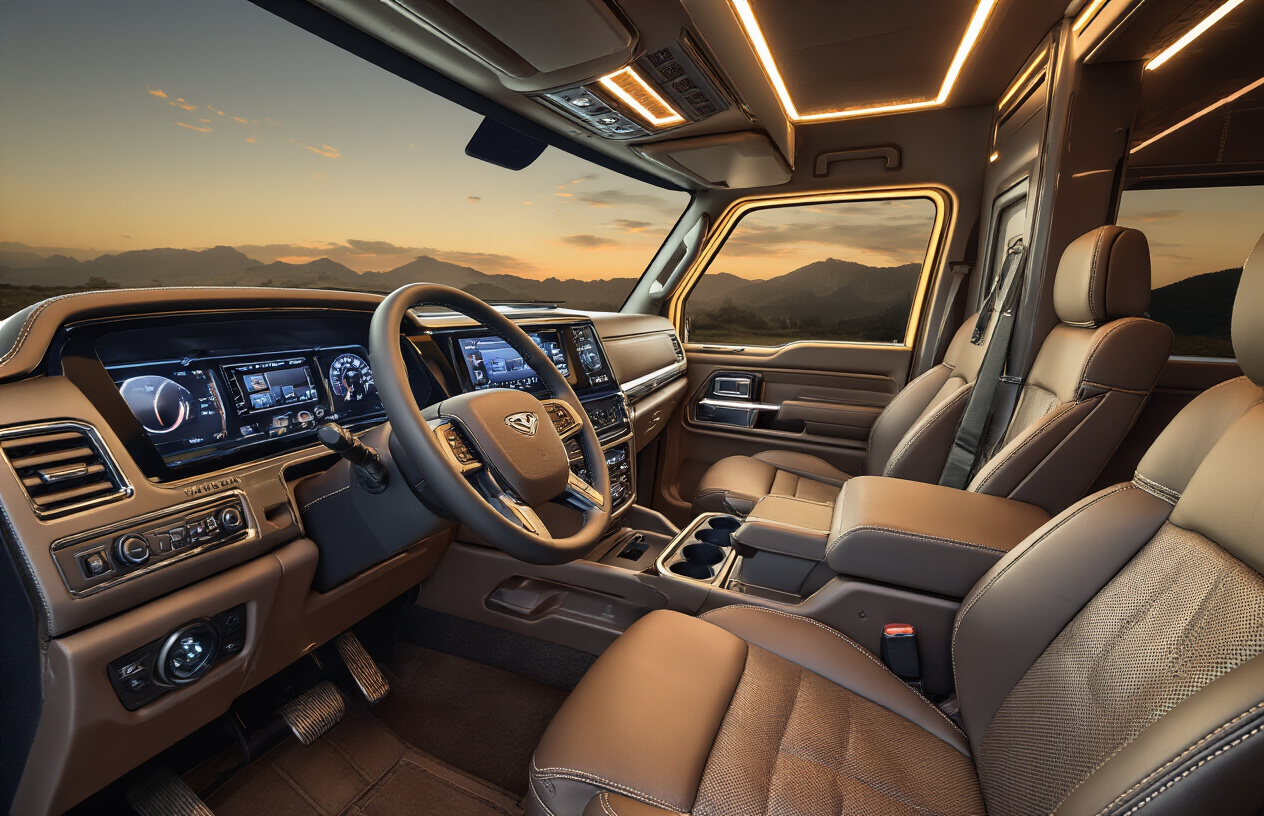
Modern heavy-duty trucks have undergone a remarkable transformation in interior design and materials quality. Leading manufacturers like Peterbilt, Kenworth, Freightliner, and Volvo have revolutionized the trucking experience by introducing state-of-the-art interiors that rival luxury vehicles. These advancements aren’t merely cosmetic upgrades—they directly impact driver well-being and performance during long-haul operations.
Premium cabin designs now feature full-grain leather upholstery, open-pore wood trim, and soft-touch surfaces throughout the interior. High-end models incorporate suede headliners and quilted leather seating that provide both comfort and durability. The thoughtful cabin layouts maximize space efficiency while maintaining an elegant aesthetic that transforms the driver’s workspace into a comfortable living environment.
Ergonomic seating represents the most critical comfort component in heavy-duty trucks. Manufacturers have invested heavily in seats designed to reduce driver fatigue through multi-way adjustments, comprehensive lumbar support, and heating and cooling options. These advanced seating systems help prevent back pain and stiffness during extended driving periods, directly contributing to driver safety and productivity.
Advanced Infotainment and Connectivity Systems
With technology integration becoming paramount in modern trucking, today’s heavy-duty trucks feature sophisticated infotainment systems that keep drivers connected and entertained. Contemporary systems include large touch screens ranging from 12.3-inch to 16.8-inch displays, with some models featuring innovative portrait-oriented configurations for enhanced usability.
Voice-activated controls and Bluetooth connectivity allow drivers to stay connected without compromising road safety. These systems support wireless Apple CarPlay and Android Auto, enabling seamless smartphone integration for navigation, communication, and entertainment. Wireless device charging capabilities ensure drivers can maintain device power without cluttering the cab with cables.
Premium audio systems have become standard features, with manufacturers partnering with renowned audio brands. Systems range from 7-speaker configurations to impressive 23-speaker Klipsch Reference Premiere stereos, providing exceptional sound quality for entertainment during rest periods and while driving.
Driver Assistance Features for Enhanced Safety
Safety technology has evolved significantly, with smart safety features designed to reduce driver stress and enhance overall road safety. Modern heavy-duty trucks incorporate lane departure warnings, adaptive cruise control, and collision mitigation systems that actively assist drivers in maintaining safe operation.
These advanced safety systems don’t just improve security—they reduce driver fatigue by assuming some of the constant vigilance required during long-haul operations. Smart safety technologies work continuously to monitor road conditions and vehicle positioning, providing alerts and automatic interventions when potential hazards are detected.
Ride Quality and Noise Reduction Technologies
Superior ride quality has become a defining characteristic of modern heavy-duty trucks. Advanced noise-reducing insulation ensures passengers remain well-insulated from road noise, creating a quieter, more comfortable driving environment. This acoustic engineering significantly reduces driver fatigue during extended periods behind the wheel.
Sleeper cab comfort has reached new heights with features rivaling hotel accommodations. Modern sleeper cabs include memory foam mattresses, blackout curtains, and advanced climate control systems with dual-zone temperature management. These features allow drivers to maintain comfortable temperatures in both driving and sleeping areas independently.
Advanced climate control systems have become essential, particularly for drivers operating in diverse weather conditions. These systems offer precise temperature control and heated steering wheels for cold weather operation, ensuring optimal comfort regardless of external conditions.
Previously mentioned comfort features work together to create an integrated environment that supports driver health and performance, making modern heavy-duty trucks true mobile offices and living spaces for professional drivers.
Pricing and Value Considerations for Heavy-Duty Trucks
Pricing and Value Considerations for Heavy-Duty Trucks
Starting MSRP Range from $47,395 to $62,050
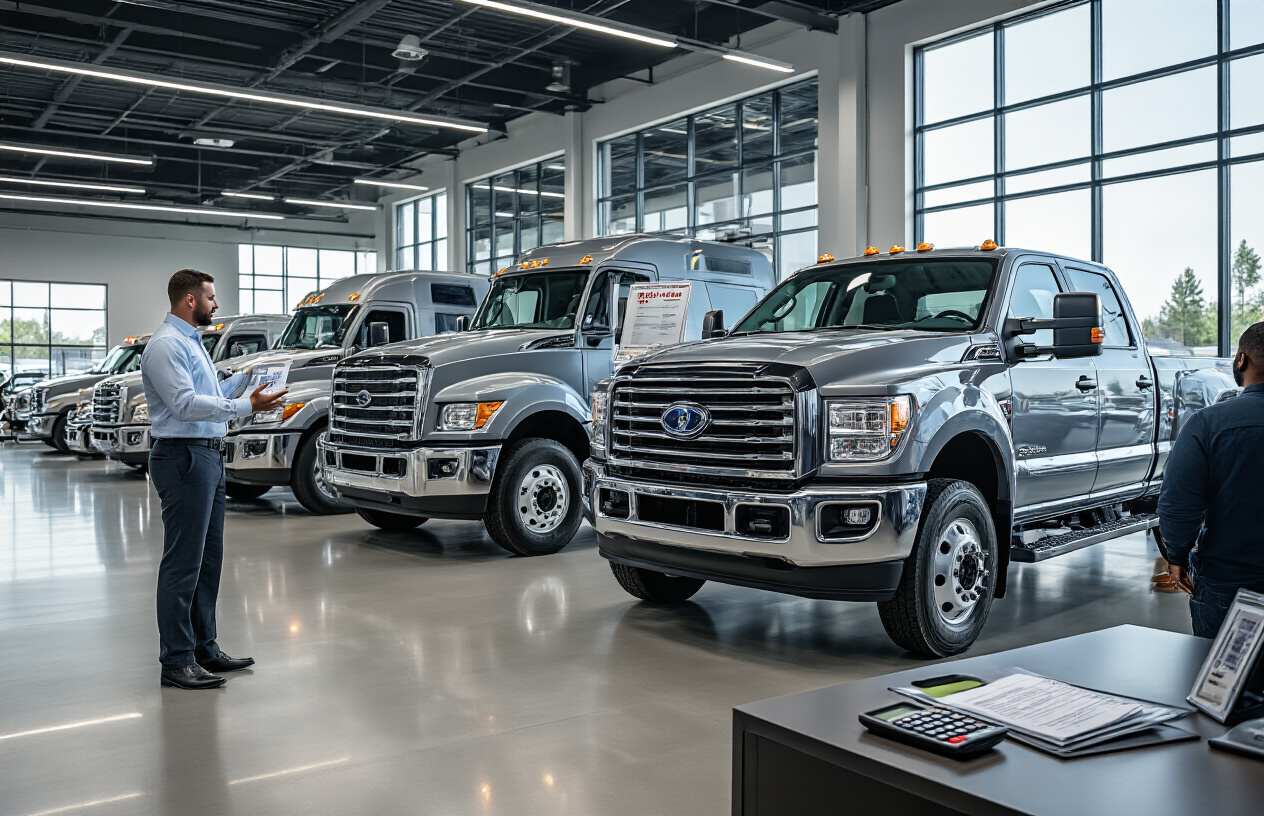
Now that we have covered the essential performance specifications and capabilities of heavy-duty trucks, understanding the pricing landscape becomes crucial for making an informed purchasing decision. The 2026 heavy-duty truck market presents a diverse pricing structure that reflects the varying capabilities and trim levels available across different manufacturers.
Entry-level heavy-duty trucks typically start around $47,395 for base configurations, offering essential work truck functionality without premium features. These base models, such as the Ford Super Duty F-250 XL, provide the fundamental heavy-duty capabilities that commercial users require while maintaining cost-effectiveness. At the upper end of the spectrum, fully-loaded premium models can reach $62,050 or higher, incorporating advanced technology packages, luxury interior appointments, and enhanced performance features.
Cost Comparison Between Leading Heavy-Duty Models
The Ford Super Duty lineup demonstrates the pricing diversity within a single manufacturer’s heavy-duty truck range. The F-250 series serves as the entry point into Ford’s heavy-duty segment, with pricing varying significantly based on trim level and configuration. Moving up to the F-350 and F-450 models, prices increase proportionally with enhanced capabilities.
| Model Series | Base Configuration | Mid-Trim Options | Premium Trims |
|---|---|---|---|
| Ford F-250 | XL Starting Price | XLT, Lariat | King Ranch, Platinum |
| Ford F-350 | XL Base Model | XLT, Lariat | King Ranch, Platinum |
| Ford F-450 | XL Commercial | XLT, Lariat | King Ranch, Platinum |
The Ram 2500 competes directly in this segment, offering competitive pricing structures that align with market expectations for heavy-duty truck capabilities and features.
Feature-to-Price Ratio Analysis for Budget Planning
When evaluating heavy-duty trucks, the feature-to-price ratio becomes a critical consideration for budget planning. Base trim levels like the XL variants focus on core functionality, offering essential heavy-duty capabilities including robust frame construction, powerful engine options, and fundamental towing equipment. These configurations provide excellent value for commercial applications where luxury features are unnecessary.
Mid-tier trims such as XLT and Lariat models bridge the gap between basic functionality and premium comfort, incorporating enhanced interior materials, improved technology packages, and additional convenience features. The Lariat Premium Package and XLT Premium Package options further expand available features while maintaining reasonable pricing structures.
Premium trims including King Ranch and Platinum variants command higher prices but deliver comprehensive feature sets including advanced technology systems, premium interior appointments, and exclusive design elements. The Platinum Plus Package represents the pinnacle of Ford’s heavy-duty truck offerings, incorporating cutting-edge features and luxury amenities.
Long-Term Value and Resale Considerations
Previously, I’ve discussed how performance capabilities directly impact truck pricing, but long-term value considerations extend beyond initial purchase price. Heavy-duty trucks historically maintain strong resale values due to their durability and continued demand in commercial markets.
The robust construction featuring fully boxed, high-strength steel frames contributes to long-term durability, supporting sustained value retention. Engine options ranging from the 6.8L gas engine to the high-output 6.7L Power Stroke diesel provide varying value propositions based on intended use patterns and fuel economy considerations.
Premium packages and appearance options, including the Black Appearance Package, STX Appearance Package, and Chrome Package, can enhance resale appeal while providing immediate aesthetic benefits. However, commercial users should carefully evaluate whether premium features align with their operational requirements and budget constraints.
With this pricing framework in mind, buyers can make informed decisions based on their specific needs, budget parameters, and long-term value expectations when selecting from the diverse heavy-duty truck market offerings.
Key Factors for Choosing the Right Heavy-Duty Truck

Key Factors for Choosing the Right Heavy-Duty Truck
Now that we’ve covered the top models, specifications, and features, the crucial step is determining which heavy-duty truck aligns perfectly with your specific needs. Making the right choice requires careful evaluation of several critical factors that will impact your truck’s performance, comfort, and long-term value.
Work Requirements and Towing Needs Assessment
The foundation of selecting the right heavy-duty truck begins with a thorough assessment of your actual work demands and towing requirements. Understanding your maximum towing capacity needs is essential, as this varies significantly across models and configurations.
For lighter commercial applications, trucks like the Ram 2500 with its standard 6.4L HEMI V8 engine provide a maximum towing capacity of 17,730 lbs, which handles most standard trailer needs. However, if your work involves pulling large gooseneck or fifth-wheel trailers, you’ll need to consider more powerful options. The Ram 3500 with its high-output turbo-diesel engine delivers an impressive 37,090 lbs towing capacity, while both the Silverado 3500 HD and Sierra 3500 HD with diesel engines can handle up to 36,000 lbs.
Payload capacity is equally important for contractors, farmers, or business owners who regularly transport heavy materials. The Silverado 3500 HD offers a maximum payload capacity of 7,234 lbs with its gasoline engine, while the Ram 3500 provides up to 7,680 lbs of payload capacity. Consider not just your current needs, but also potential future requirements to ensure your investment remains valuable as your business grows.
Daily Driving Comfort and Usability Factors
While heavy-duty trucks prioritize capability, daily driving comfort has become increasingly important as these vehicles often serve dual purposes as work trucks and family vehicles. Modern heavy-duty trucks feature advanced suspension systems that balance load-carrying capability with ride comfort.
The suspension setup significantly impacts daily usability. Leaf springs provide excellent strength and reliability for heavy loads but can result in a stiffer ride when unloaded. Coil springs offer improved handling and a smoother ride during everyday driving, making them ideal for drivers who use their trucks for both work and personal transportation.
Advanced features like air suspension systems, available on models like the Ram 2500, provide auto-leveling capabilities that maintain trailer stability while offering adjustable ride height and comfort. Consider features like power-deploying running boards, modern infotainment systems, and multiple power outlets throughout the cabin and bed area, which enhance daily usability and convenience.
Brand Reliability and Service Network Coverage
Previously, I’ve emphasized the importance of capability, but long-term reliability and service support are equally crucial factors. Each major manufacturer offers distinct advantages in terms of brand reliability and service network coverage.
General Motors brands (Chevrolet and GMC) provide extensive dealer networks across the country, ensuring parts availability and service access. The Silverado HD and Sierra HD models share identical powertrains and mechanical components, with GMC positioning itself as the more upscale option while maintaining the same proven reliability.
Ram Heavy Duty trucks, developed by Stellantis, offer unique engineering approaches, particularly with their Cummins turbo-diesel engines, which have established a strong reputation for durability in commercial applications. The brand’s service network continues to expand, providing competitive coverage for maintenance and repairs.
When evaluating reliability, consider factors like warranty coverage, historical performance data, and the availability of certified service centers in your area. For commercial users, minimizing downtime is critical to business operations.
Available Configurations and Customization Options
With this in mind, next, we’ll examine the various configurations and customization options that can tailor your heavy-duty truck to specific applications. Heavy-duty trucks offer numerous bed sizes and cab configurations to match different work requirements.
Both the Silverado HD and Sierra HD models offer bed sizes ranging from 6.9 feet with 69.5 cubic feet of cargo capacity to 8.2 feet with 83.5 cubic feet of space. These options accommodate different types of cargo and equipment storage needs.
Advanced four-wheel-drive systems with transfer cases and low-range capability are essential for off-road worksites or challenging terrain conditions. Many trucks also offer enhanced trailering features, including fifth-wheel and gooseneck towing capabilities, extended trailering mirrors with wide-angle secondary mirrors, and multi-view trailering camera systems with backup assist.
Additional customization options include larger fuel tanks for extended range, heavy-duty alternators and batteries for powering work equipment, and enhanced cooling systems for sustained heavy-duty operation. These configurations ensure your truck can be tailored to match your specific work environment and operational demands.
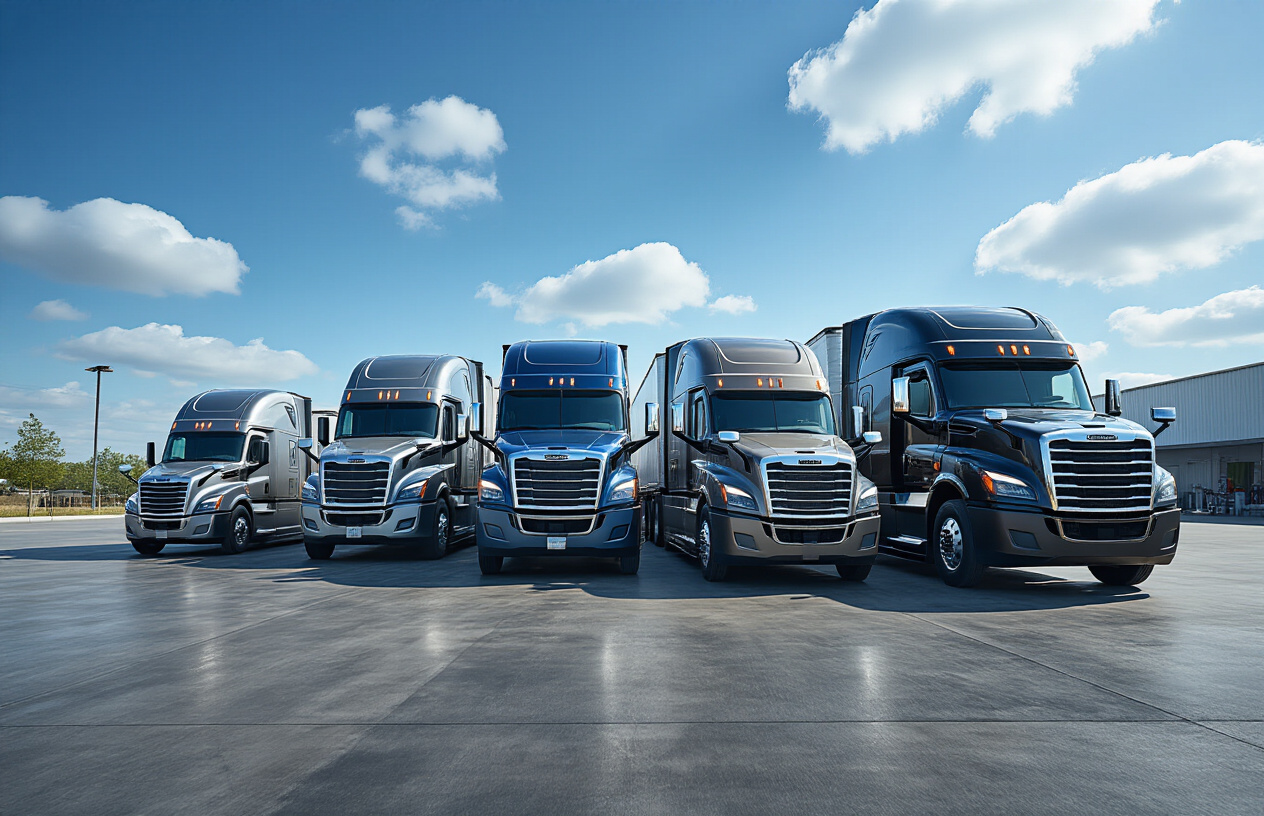
The 2026 heavy-duty truck market represents the pinnacle of automotive engineering, combining unprecedented power capabilities with advanced comfort and technology features. From the Ford F-250 Super Duty’s massive towing capacity to the Ram 2500’s refined coil-spring suspension, these trucks prove that capability no longer requires sacrificing daily drivability. With MSRP ranges spanning from $47,395 to over $62,050, buyers have access to vehicles that can handle extreme workloads while providing premium amenities typically found in luxury vehicles.
When selecting your ideal heavy-duty truck, consider your specific performance requirements, comfort preferences, and budget constraints. The top-ranked models like the Ram 2500, Ram 3500, and Ford Super Duty F-350 each offer distinct advantages in towing, payload, and overall value proposition. As these trucks continue to evolve with cutting-edge technology and enhanced durability features, investing in a 2026 heavy-duty model means securing a vehicle designed to perform under the most demanding conditions for years to come.