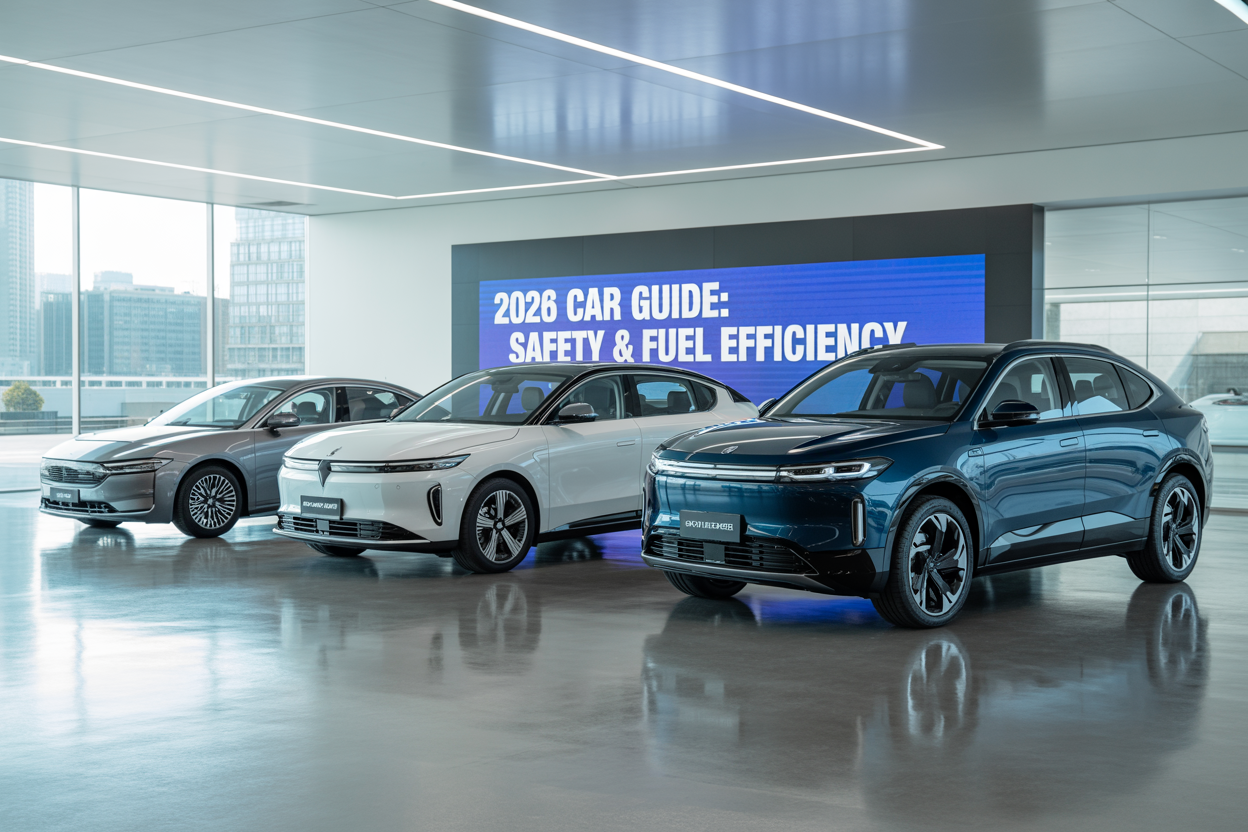
Shopping for a new car in 2026? This guide breaks down the safest, most fuel-efficient sedans, SUVs to help you find the perfect vehicle that saves money at the pump while protecting your family.
This comprehensive guide is designed for car buyers who want maximum value without compromising on safety or efficiency. You’ll find detailed comparisons, expert ratings, and real-world insights to make your next purchase decision easier.
We’ll walk you through the top fuel-efficient sedans leading the market, from the Toyota Camry Hybrid to the impressive Honda Accord. You’ll also discover which SUVs deliver the best gas mileage without sacrificing the space and versatility you need. Finally, we’ll decode the safety features and expert rating systems that separate good cars from great ones, so you know exactly what those numbers mean for your daily driving.
Most Fuel-Efficient Sedans for 2026
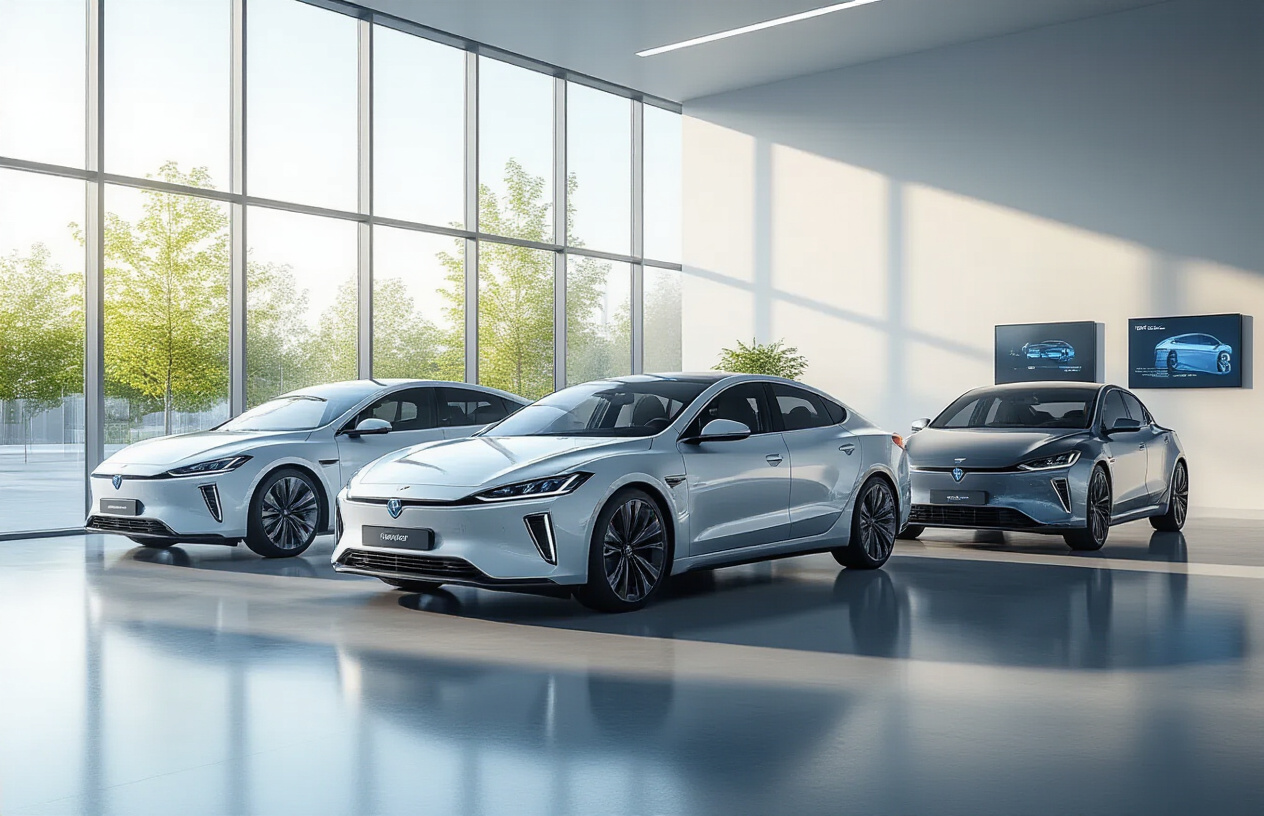
Most Fuel-Efficient Sedans for 2026
Top Hybrid Sedan Options with Outstanding MPG
The 2024 Toyota Camry Hybrid stands as the flagship choice for hybrid sedan excellence, earning an impressive 4.6 expert rating. This exceptional midsize sedan combines Toyota’s renowned reliability with outstanding fuel economy, making it a compelling option for buyers seeking maximum efficiency without sacrificing quality. The Camry Hybrid demonstrates how hybrid technology has matured to deliver both performance and economy in a single package.
Best Compact Sedans for Maximum Fuel Savings
Now that we’ve covered hybrid options, the compact sedan segment offers several outstanding choices for fuel efficiency. The 2025 Hyundai Elantra leads this category with a stellar 4.6 expert rating, delivering a highly compelling package that combines features, style, and an unbeatable warranty. This compact sedan proves that small doesn’t mean compromising on quality or technology.
The 2025 Nissan Versa presents excellent value as the least expensive new car available in America, achieving a solid 4.2 expert rating while delivering comfort and impressive gas mileage. The 2025 Kia K4, also rated at 4.5, brings an all-new, tech-forward approach with exceptionally roomy interior space that sets it apart from traditional compact sedan expectations.
Additional strong performers include the 2024 Kia Forte (4.2 rating), which offers loads of room, impressive fuel economy, and solid resale value, making it a bargain choice among compact sedans. The 2025 Nissan Sentra rounds out this category with a 4.0 rating, providing competent and easy-to-live-with characteristics at attractive pricing.
Midsize Sedans That Deliver Economy and Space
With this in mind, the midsize sedan category balances fuel efficiency with family-friendly space requirements. The 2025 Honda Accord achieves the highest rating in this segment at 4.8, earning recognition as a Best Buy Award winner for its exceptional blend of daily practicality, excellent driving manners, and outstanding overall quality.
The 2025 Nissan Altima offers a more moderate approach with a 4.1 rating, providing comfortable adequacy in a competitive field. For buyers prioritizing all-weather capability, the 2025 Subaru Legacy stands alone as the only midsize sedan with standard all-wheel drive, earning a 4.0 rating while delivering roominess, comfort, and top-notch advanced safety technology.
Budget-Friendly Sedans with Impressive Gas Mileage
Previously, we’ve seen how premium features can enhance fuel efficiency, but budget-conscious buyers have excellent options available. The 2024 Mitsubishi Mirage G4, despite its 3.1 expert rating, represents an affordable and efficient option in the shrinking subcompact car class. While its rivals may offer more modern features, the Mirage G4 delivers basic transportation needs at an attractive price point.
The 2025 Volkswagen Jetta, with a 3.9 rating, provides European refinement and handling at a low price point, featuring noteworthy improvements for 2025. Even the departing 2025 Chevrolet Malibu, rated at 3.5, offers budget-friendly midsize sedan access, though buyers should consider its age relative to competitors.
These budget-friendly options prove that fuel efficiency doesn’t require premium pricing, allowing cost-conscious buyers to achieve excellent gas mileage while maintaining reliable transportation.
Highest-Rated SUVs for Fuel Economy in 2026
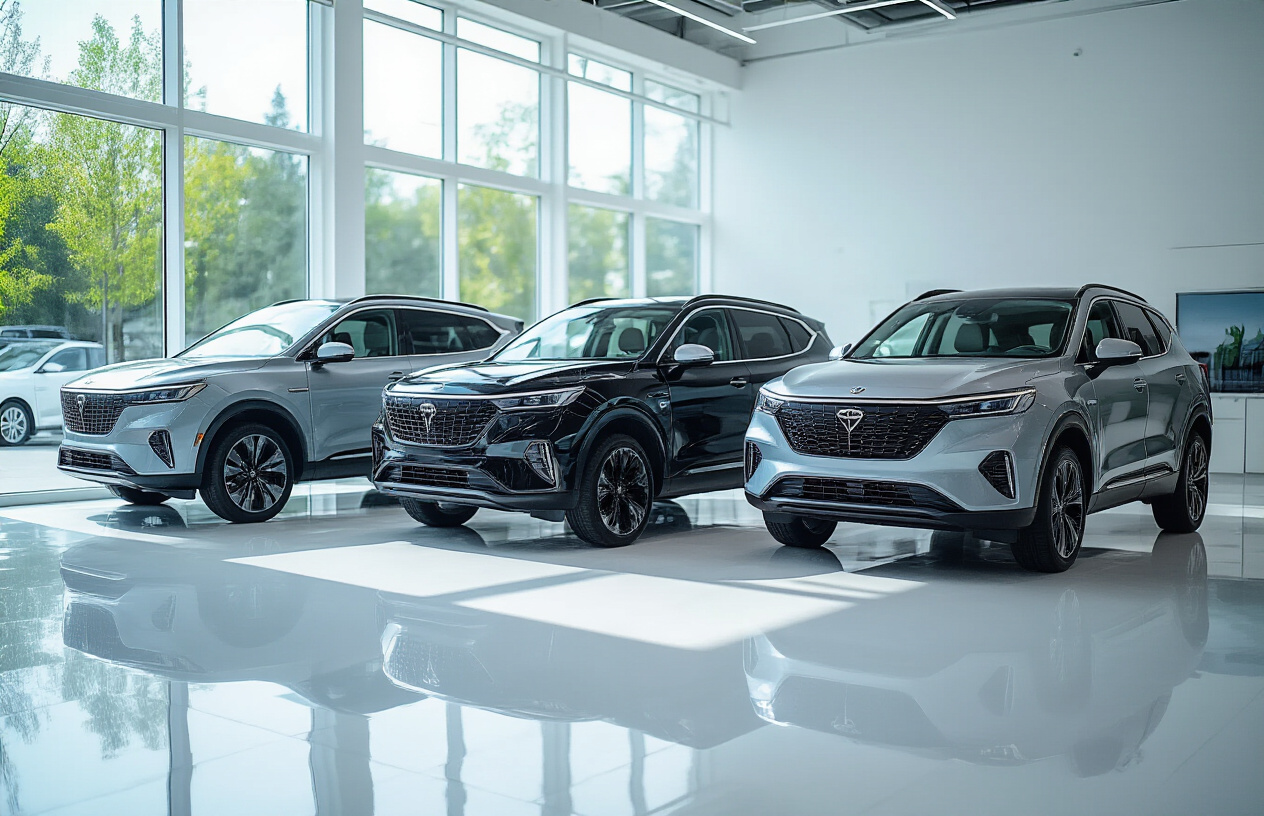
Highest-Rated SUVs for Fuel Economy in 2026
Most Efficient Hybrid SUVs for Families
The 2025 Kia Sorento Hybrid leads the pack with an impressive 4.7 expert rating, offering a well-equipped, fuel-efficient smaller midsize SUV with seating for six. This vehicle perfectly balances family needs with exceptional fuel economy, making it an ideal choice for households seeking both space and efficiency.
The 2025 Subaru Forester Hybrid delivers 35 mpg without compromising the Forester’s renowned capability or charm, earning a solid 4.4 expert rating. This hybrid variant maintains the adventurous spirit that Subaru owners love while significantly improving fuel efficiency.
For larger families, the 2025 Toyota Crown Signia stands out as a new 2-row midsize SUV with a standard hybrid drivetrain and all-wheel drive, achieving a 4.4 expert rating. The Toyota Venza also merits consideration with its 4.4 rating, functioning as a comfortable midsize 5-passenger SUV with great fuel efficiency from its standard hybrid powertrain.
Compact Crossovers That Maximize Miles Per Gallon
Now that we’ve covered family-sized hybrids, compact crossovers deliver exceptional fuel economy in smaller packages. The 2026 Honda CR-V maintains its benchmark status among compact SUVs with the highest expert rating of 4.8, masterfully combining practicality, efficiency, and easy driving manners.
The 2025 Toyota RAV4, earning a 4.6 expert rating, remains the best-selling compact SUV and serves as a benchmark for practicality, safety, and reliability. The 2026 Kia Sportage follows closely with a 4.6 rating, boasting stylish looks, impressive tech, and great value proposition.
The 2025 Subaru Crosstrek targets adventure-minded drivers with its standard all-wheel drive, earning a 4.6 rating while remaining affordable, capable, and practical. The 2025 Hyundai Tucson rounds out this category with a 4.5 expert rating, representing an excellent compact SUV that gets even better for the 2025 model year.
Family-Size SUVs with Surprising Fuel Efficiency
Previously, we’ve explored compact options, but larger SUVs are also achieving remarkable fuel efficiency. The 2025 Subaru Outback steers a fine line between SUV and wagon styles with a 4.6 expert rating, always delivering dependability and sure-footedness while maintaining efficient fuel consumption.
The 2025 Mazda CX-50 and CX-5 both offer engaging driving experiences with 4.5 and 4.4 expert ratings respectively. The CX-50 stands as one of the more engaging contenders in the compact SUV class, while the CX-5 brings rare enjoyment to the driving experience without sacrificing fuel economy.
Understanding SUV Fuel Economy Ratings vs Real-World Performance
With this in mind, understanding how expert ratings translate to real-world performance becomes crucial for buyers. Kelley Blue Book’s expert rating system ranks vehicles from 0-5.0, where ratings of 4.0 and above represent good to exceptional vehicles worth considering.
The rating system evaluates vehicles through comprehensive testing, including mundane tasks like parking and cargo loading, as well as essential performance metrics including acceleration, braking, handling, interior comfort, and build quality. Editors drive and live with each vehicle, asking critical questions about interior and exterior design, engine performance, ride quality, features, comfort, and price value.
Rather than arbitrary scoring, KBB’s editors rank vehicles within their competitive class, ensuring each vehicle proves itself better or worse than direct competitors. This methodology helps buyers understand how vehicles like the 2026 Hyundai Kona (4.8 rating) and 2025 Nissan Rogue (4.3 rating) compare within their respective segments, providing reliable guidance for fuel-efficient SUV selection.
Safety Features That Define 2026’s Best Vehicles
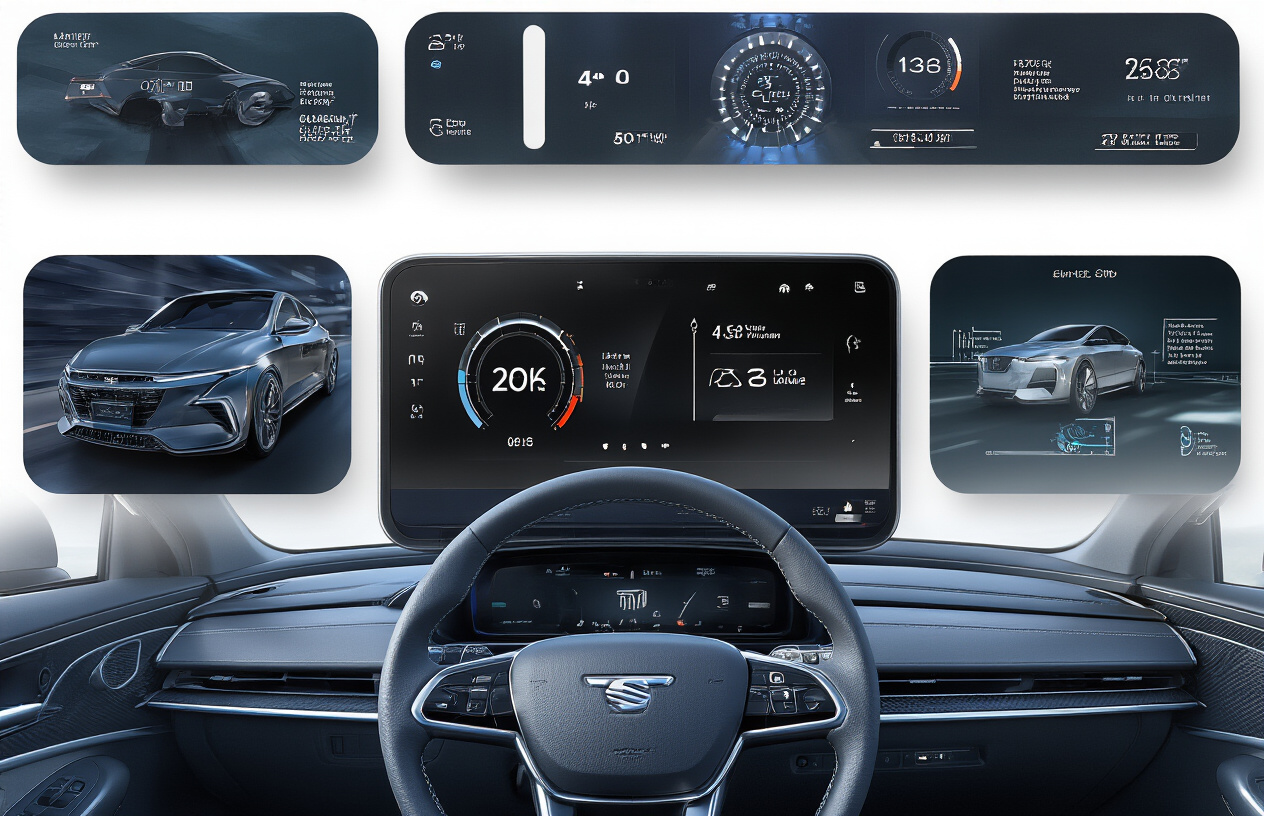
Safety Features That Define 2026’s Best Vehicles
Advanced Driver Assistance Technologies in Top Models
Now that we’ve covered fuel efficiency, let’s examine the cutting-edge safety technologies that set 2026’s top vehicles apart. The most significant advancement comes from Volvo’s revolutionary Multiadaptive Safety Belts, which represent a quantum leap in passive safety technology. This AI-driven system utilizes the expanding computational power of modern electric vehicles like the Volvo EX60 to create personalized protection for each occupant.
The system employs multiple sensors to gather detailed information about occupant size, weight, and body type, then responds with precision during crash scenarios. Additional sensors detect the specific forces acting on the vehicle and their direction, allowing the sophisticated retractor to precisely control belt webbing deployment. This provides maximum protection while minimizing injury potential. What makes this technology truly innovative is Volvo’s commitment to continuous improvement through over-the-air updates, allowing the algorithms to evolve as crash data analysis advances.
Automatic Emergency Braking systems are becoming mandatory across all vehicle categories. Under FMVSS No. 127, the National Highway Traffic Safety Administration requires new vehicles to detect other vehicles, objects, and pedestrians, then provide automatic intervention to prevent collisions or significantly reduce impact severity. This mandate must be fully implemented across all new light vehicles by September 1, 2029.
Lane Keeping Assist programs and Blind-spot Warning Systems with intervention capabilities are now standard features in top-rated models. These systems not only alert drivers to potential hazards but actively prevent lane changes into occupied spaces, creating multiple layers of active protection.
Crash Test Ratings and Safety Awards for Leading Sedans
Previously, I’ve mentioned the importance of understanding rating systems. NHTSA’s New Car Assessment Program is undergoing significant changes that directly impact how 2026 sedans are evaluated. The coveted star rating system now incorporates testing of advanced driver assistance features, forcing manufacturers to improve performance across all conditions, particularly in low-light scenarios where current systems often struggle.
The integration of automatic emergency braking performance into star ratings means sedans must demonstrate consistent protection capabilities regardless of environmental conditions. Euro NCAP’s 2026 protocols provide comprehensive testing frameworks that evaluate everything from crash protection to post-crash safety systems, setting global benchmarks for sedan safety performance.
SUV Safety Innovations for Family Protection
With this in mind, next, we’ll explore how SUVs are incorporating family-focused safety innovations. Rear Seat Belt Reminders will become mandatory in all new passenger vehicles beginning in September 2027, addressing the critical issue of rear passenger safety. This requirement aims to increase seat belt usage rates and further reduce fatalities and injuries in family vehicles.
SUVs are also leading the implementation of comprehensive Driver Monitoring systems, as outlined in Euro NCAP’s SD 201 and SD 202 protocols. These systems continuously assess driver alertness and capability, providing intervention when necessary. The protocols include specific guidance for General Vehicle Controls testing, ensuring that safety systems remain accessible and functional across diverse driving scenarios.
eCall emergency communication systems, evaluated under Euro NCAP’s PC 201 protocol, provide automatic crash notification and location services, ensuring rapid emergency response when families need it most.
Standard vs Optional Safety Equipment Comparison
The landscape of safety equipment availability is rapidly shifting, with many previously optional features becoming standard across vehicle categories. Automatic Emergency Braking represents the most significant change, transitioning from premium option to federal requirement by 2029.
| Safety Feature | 2026 Status | Implementation Timeline |
|---|---|---|
| Automatic Emergency Braking | Becoming Standard | Mandatory by Sept 2029 |
| Lane Keeping Assist | Standard in Top Models | Varies by Manufacturer |
| Blind-spot Warning with Intervention | Standard in Premium Vehicles | Expanding to Lower Trims |
| Rear Seat Belt Reminders | Optional | Mandatory by Sept 2027 |
| Driver Monitoring Systems | Premium Feature | Expanding Rapidly |
| Multiadaptive Safety Belts | Volvo Exclusive | Limited Availability |
Drunk Driver Detection technology remains in development phases, with various approaches under consideration including passive breathalyzers, infrared spectroscopy sensors, eye tracking systems, and steering behavior analysis. However, regulatory challenges around intervention protocols mean widespread implementation remains uncertain for 2026 models.
The distinction between standard and optional safety equipment continues to blur as regulatory requirements expand and consumer expectations drive manufacturers to include more comprehensive protection systems as baseline features rather than premium upgrades.
Expert Rating Systems and What They Mean for Buyers

Expert Rating Systems and What They Mean for Buyers
Understanding Professional Review Scores and Rankings
Now that we have covered the top fuel-efficient vehicles and safety features, let’s explore how expert rating systems work and what they mean for your car-buying decision. Professional automotive rating systems use sophisticated methodologies to evaluate vehicles across multiple criteria, with each system serving different buyer needs.
The NHTSA (National Highway Traffic Safety Administration) uses a five-star rating system where five stars indicate “overall injury risk for this vehicle is much less than average,” while one star means “overall injury risk for this vehicle is much greater than average.” These ratings can only be compared within the same vehicle class and weight range (plus or minus 250 pounds), meaning you cannot directly compare a 4,500-pound SUV with a 3,000-pound sedan.
MotorTrend’s Ultimate Car Rankings employ a more comprehensive approach, using a proprietary algorithm that weighs criteria based on varying buyer needs across different vehicle classes. Their 10-point scoring system considers that buyers of small sedans and three-row luxury SUVs have different priorities. Scores around 7 represent average performance, while scores approaching or surpassing 8 indicate above-average or excellent performance within that specific segment.
Key Performance Factors That Drive Vehicle Ratings
Professional rating systems evaluate multiple performance dimensions to provide comprehensive vehicle assessments. MotorTrend’s system emphasizes “Performance of Intended Function” as the most heavily weighted criterion across almost every vehicle subclass they rank. This includes driving performance tested both on track and in real-world conditions, covering acceleration, braking, steering, handling, ride comfort, transmission performance, and engine characteristics.
Fuel economy and driving range constitute another critical factor, recognizing that longer driving range means more time between fill-ups or recharging sessions. For electric vehicles, charging time becomes an additional consideration. Technology integration focuses not just on impressive features but on how well they function in practice—whether drivers will actually use the systems effectively.
Design innovation captures practical elements like rear doors that open to nearly 90 degrees on family SUVs, clever storage solutions, smartly located USB ports, and user-friendly roof-rail crossbars. Safety serves as a bonus factor for vehicles earning top grades in IIHS or NHTSA tests, though it’s not the primary ranking driver.
How Reliability and Build Quality Impact Long-Term Value
With this in mind, next, we’ll examine how professional systems evaluate long-term ownership costs. MotorTrend incorporates analysis from IntelliChoice, which examines five-year cost-of-ownership data including depreciation, repair costs, insurance, maintenance, financing, and fuel expenses. This comprehensive approach recognizes that value extends far beyond the initial purchase price.
The rating systems acknowledge that buyers make payments for years after the new car experience fades, making long-term reliability predictions crucial. Build quality assessments consider how well mechanical components perform up to class standards, providing confidence across various driving situations—from routine commuting to emergency maneuvers requiring panic braking or quick acceleration for passing.
Professional reviewers emphasize that higher-sales-volume trims and powertrains receive greater weight in overall rankings since these represent what most buyers actually purchase. A high-performance variant might be exceptional, but if the volume-selling base model is mediocre, the overall ranking reflects the latter more heavily.
Warranty Coverage and Owner Satisfaction Metrics
Previously, we’ve established how professional systems evaluate technical performance, but warranty coverage and owner satisfaction provide additional layers of buyer protection. While the reference content doesn’t detail specific warranty terms, it emphasizes that all vehicles sold in the United States must comply with Federal motor vehicle safety standards covering everything from windshield wipers and brakes to crashworthiness and fuel integrity.
The rating systems recognize that automotive needs change over time, making long-term satisfaction predictions valuable for buyers. Professional rankings help navigate the complicated new car shopping process by providing segment-specific evaluations rather than one-size-fits-all comparisons.
When shopping across segments—perhaps considering both midsize sedans and similarly priced SUVs—remember that scores are only comparable within each segment. The most effective approach involves selecting top-ranked vehicles from relevant segments and consulting detailed make-model analyses to understand specific pros and cons for your particular needs.
Smart Buying Strategies for Maximum Value

Smart Buying Strategies for Maximum Value
Now that we have covered the top fuel-efficient sedans, highest-rated SUVs for fuel economy, and essential safety features, let’s explore how to make intelligent purchasing decisions that maximize both efficiency and long-term value.
Balancing Fuel Economy with Performance Needs
When shopping for a new vehicle, it’s crucial to understand that good fuel economy is relative to each category. There are models in every segment that deliver superior efficiency compared to their peers, from hybrid SUVs to conventional gasoline-powered cars with advanced engine technology.
The typical driver covers about 12,000 miles annually, making fuel savings a significant consideration. For instance, upgrading from a 2017 Honda Odyssey (21 mpg overall) to a 2022 Odyssey (22 mpg) saves approximately $102 annually in fuel costs. However, more dramatic improvements are possible by considering hybrid alternatives or downsizing when practical.
The Toyota Sienna exemplifies this potential, delivering 36 mpg overall in testing compared to traditional minivans. This represents potential savings of $933-$1,045 annually when replacing older models. Similarly, moving from a 2017 Chevrolet Traverse (16 mpg) to a Toyota Highlander Hybrid (35 mpg) could save $1,596 yearly without sacrificing three-row functionality.
Trim Level Choices That Impact Efficiency and Features
Previously, I’ve discussed how different powertrain options affect fuel economy, but trim levels also play a crucial role in both efficiency and value proposition. Higher trim levels often include features that can impact fuel economy, such as larger wheels, additional weight from luxury amenities, and more powerful engine options.
When evaluating trim levels, consider that fuel-efficient models often provide additional benefits beyond cost savings. Hybrid versions frequently offer improved performance characteristics, including quicker acceleration and quieter operation, as demonstrated in models like the Hyundai Tucson Hybrid.
The key is finding the sweet spot where essential features align with efficiency goals. Many fuel-efficient vehicles now come standard with active safety features that were once premium options, making base or mid-level trims more attractive from both a value and safety perspective.
Hybrid vs Plug-in Hybrid vs Traditional Engine Options
With this in mind, next, we’ll examine the three primary powertrain options available in 2026. Hybrids no longer carry the substantial price premiums they once did, typically costing just $1,000-$2,000 more than conventional versions of the same model. This modest upcharge means fuel savings can offset the purchase price difference within just a few years.
Hybrid vehicles offer multiple advantages beyond fuel economy. They run cleaner, operate silently at low speeds on electric power, and often demonstrate superior reliability. Survey data consistently shows hybrid models ranking among the most reliable vehicles, with owners reporting higher satisfaction levels compared to conventional versions.
Plug-in hybrid electric vehicles (PHEVs) bridge the gap between hybrids and full electric vehicles. They provide 22-45 miles of electric-only driving capability, sufficient for most daily commutes and local errands. Most PHEVs qualify for federal tax incentives up to $7,500, further improving their value proposition.
When operating in hybrid mode after battery depletion, PHEVs may be slightly less efficient than traditional hybrids due to additional battery weight. However, for drivers who can charge frequently and take shorter trips, the combined efficiency can be impressive. The Prius Prime, for example, delivers 50 mpg in hybrid mode compared to 52 mpg for the regular Prius, but its electric-only capability makes its effective fuel economy approach 70 mpg for the first portion of each trip.
Resale Value Considerations for Long-Term Ownership
Long-term value extends beyond initial purchase price and fuel savings. Hybrid vehicles have demonstrated strong resale value retention, partly due to their proven reliability and increasing consumer demand for fuel-efficient options. The legendary reliability of models like the Toyota Prius contributes significantly to their strong resale values.
Electric vehicles represent the ultimate fuel savings strategy, cutting driving costs by 50-75% compared to gasoline at current prices. While some EVs have shown reliability concerns, analysis indicates these issues typically stem from being all-new designs with multiple new technologies rather than inherent EV component problems. Waiting a year or two after initial launch allows manufacturers to address early production issues.
For buyers considering long-term ownership, the automotive landscape is rapidly shifting toward electrification. Given automaker commitments and regulatory pressures, particularly in states like California, electric vehicles are becoming increasingly mainstream. This trend suggests that fuel-efficient vehicles, especially hybrids and EVs, will maintain strong resale values as consumer preferences continue evolving toward efficiency and environmental consciousness.
Choosing the right vehicle in 2026 comes down to understanding your priorities and doing your research. The sedans and SUVs highlighted in this guide represent the perfect balance of fuel efficiency, safety, and overall value. From the Toyota Camry Hybrid’s exceptional reliability to the Kia Niro’s class-leading fuel economy among SUVs, these vehicles prove that you don’t have to sacrifice performance for efficiency. Expert ratings, particularly those in the 4.0-5.0 range, serve as reliable indicators of quality and long-term satisfaction.
The automotive landscape continues to evolve, but the fundamentals remain the same: focus on vehicles that meet your specific needs while delivering proven reliability and efficiency. Whether you’re considering a compact sedan for daily commuting or a fuel-efficient SUV for family adventures, the 2026 model year offers compelling options that will serve you well for years to come. Take advantage of expert reviews, safety ratings, and real-world fuel economy data to make an informed decision that aligns with both your budget and lifestyle requirements.